You Won't Believe What I Discovered in the Lofoten Islands
Nestled above the Arctic Circle, the Lofoten Islands are more than just dramatic peaks and midnight sun—they’re alive with culture. I went seeking scenery but found something deeper: centuries-old traditions still pulsing through fishing villages, local kitchens, and handmade crafts. This isn’t just a destination; it’s a living story. Let me take you where guidebooks rarely go—the heart of Norwegian coastal heritage, where every meal, conversation, and quiet moment tells a tale. Here, nature and humanity are not separate forces but partners in a rhythm shaped by tides, seasons, and generations of quiet resilience. What I discovered was not a frozen relic of the past, but a vibrant, breathing way of life that invites presence, respect, and wonder.
First Impressions: A Landscape That Feels Mythic
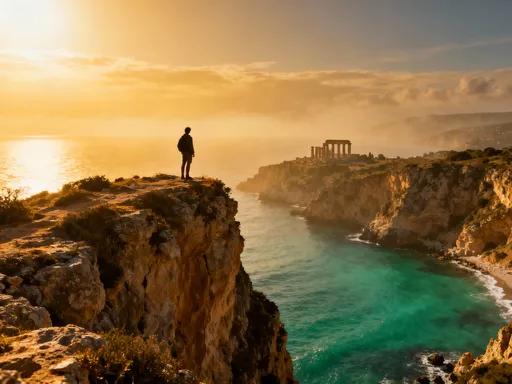
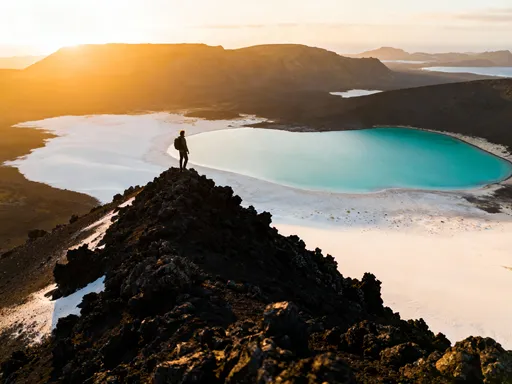
The first glimpse of the Lofoten Islands from the air feels like stepping into a legend. Jagged granite peaks rise abruptly from the Norwegian Sea, their snow-dusted summits glowing under the low-hanging Arctic light. As the small plane descends, the archipelago unfolds like a series of sculpted islands connected by narrow bridges and winding coastal roads. The contrast is breathtaking—deep blue waters, emerald-green inlets, and clusters of red wooden cabins perched along the shore. These are the rorbuer, once homes for seasonal fishermen and now cherished cultural landmarks that offer visitors a chance to sleep where tradition still echoes in the walls.
Arriving by ferry from the mainland enhances the sense of entering another world. As the boat cuts through the calm morning fog, the silhouette of mountains emerges like ancient sentinels. The geography of Lofoten is not just beautiful—it is defining. With no flat plains and few sheltered valleys, life here has always been shaped by the sea and the steep terrain. Villages cling to narrow strips of land between mountain and water, their survival dependent on the rhythm of the tides and the migration of fish. This isolation has preserved a way of life that feels untouched by the rush of modernity, where community bonds remain strong and self-reliance is not a choice but a necessity.
Historically, the islands were inhabited as far back as the Viking Age, with archaeological evidence pointing to settlements over a thousand years old. Fishing has long been the economic backbone, particularly the seasonal migration of Arctic cod, known locally as skrei. Even today, the fishing season dictates much of the annual calendar, from preparation in late winter to the intense processing months of spring. The legacy of this maritime economy is visible in every aspect of island life—from the design of the boats to the architecture of the homes and the stories passed down through families.
What makes Lofoten distinct from mainland Norway is not just its landscape, but the way that landscape has nurtured a unique cultural identity. The people of Lofoten speak with a dialect that carries the lilt of old Norse, and their customs reflect a deep connection to the sea that is both practical and spiritual. There is a quiet pride in living where few would choose to settle—a resilience born of enduring long winters, fierce storms, and the constant presence of the elements. This sense of place is not something that can be captured in a photograph; it must be felt, heard, and lived.
Living Tradition: The Rhythm of Fishing Culture
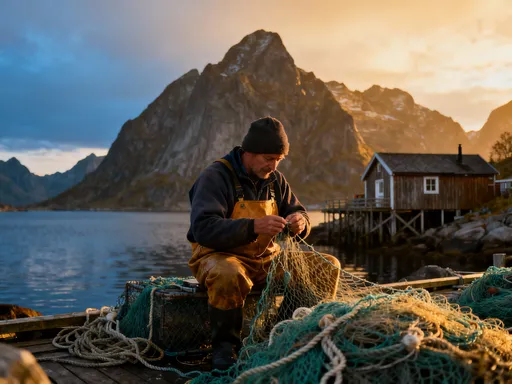
At the heart of Lofoten’s cultural identity is the sea, and more specifically, the annual return of the Arctic cod. Every winter, millions of skrei swim from the Barents Sea to spawn in the cold, nutrient-rich waters around the islands. This migration has sustained communities for over a thousand years, forming the foundation of both the economy and the cultural calendar. To witness the fishing season is to understand how deeply tradition and survival are intertwined. Nets are cast at dawn, boats return with heavy loads, and the air fills with the sharp, briny scent of fresh fish being prepared for drying.
One of the most iconic sights in Lofoten is the hjell—the wooden drying racks that line the shores of villages like Å, Reine, and Henningsvær. These simple structures, made of rough-hewn timber, hold thousands of cod fillets that will be air-dried into tørrfisk, a staple preserved food that has fed Norwegians for centuries. The process has changed little over time: fish are gutted, split, and hung to dry in the cold, salty wind. It is a labor-intensive practice, requiring patience, precision, and an intimate knowledge of weather patterns. A sudden rainstorm can ruin an entire batch, so fishermen watch the skies as closely as they watch the tides.
I spent a morning with Lars, a third-generation fisherman from Å, as he checked his family’s hjell at sunrise. His hands moved with practiced ease, turning fillets and adjusting lines without hesitation. “This is not just work,” he said, his voice steady and calm. “It is memory. My grandfather did this. My father did this. Now my son helps me. We are not just drying fish—we are keeping a promise.” His words stayed with me. In a world where so much feels disposable, the act of preserving fish is also an act of preserving identity.
The importance of sustainable fishing cannot be overstated. While the skrei population remains stable due to strict quotas and international cooperation, local fishermen are deeply aware of the fragility of their ecosystem. Many now use selective gear to minimize bycatch and avoid overfishing. Some have shifted to eco-tourism, offering guided boat tours that educate visitors about marine conservation. This balance between tradition and responsibility reflects a broader cultural shift—honoring the past while adapting to the future. In Lofoten, fishing is not merely an industry; it is a way of understanding one’s place in the natural world.
Taste of Place: Eating Like a Local
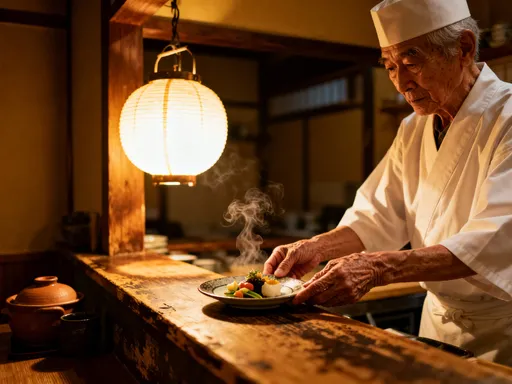
To eat in Lofoten is to taste history. One of the most memorable meals I experienced was in a small family-run kitchen in the village of Sakrisøy. The dish was mølje—a traditional preparation of boiled cod served with its roe and liver, all gently poached in seasoned broth. It arrived steaming on a chipped enamel plate, accompanied by boiled potatoes and a dollop of creamy butter. The texture was delicate, the flavor rich and oceanic, with a depth that only fresh, line-caught fish can provide. As I ate, the owner, Ingrid, explained that this meal was once eaten by fishermen after long nights at sea—a warm, nourishing return to land.
Food preservation is central to the island lifestyle. With long winters and limited access to fresh produce, methods like drying, salting, and fermenting have been essential for survival. Tørrfisk, the air-dried cod, can be stored for months and rehydrated for use in stews and soups. Rakfisk, fermented fish, is another traditional staple, though its strong aroma can be surprising to first-time visitors. These preservation techniques are not relics—they are still practiced in homes and small processing sheds along the coast. They represent a deep respect for resources and a refusal to waste what the sea provides.
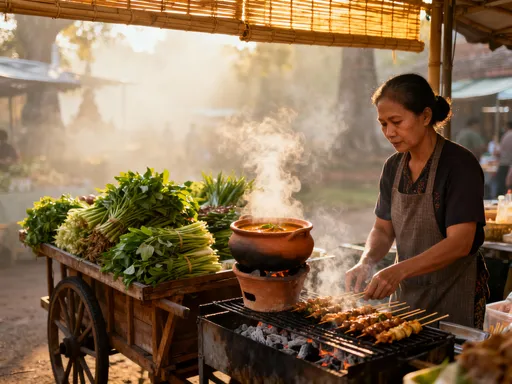
I was fortunate to attend an autumn fish market in Svolvær, where villagers gathered to celebrate the season’s catch. Long tables were set up under a canvas tent, and locals served everything from smoked salmon to seaweed salads. Children ran between stalls, elders shared stories over cups of strong coffee, and a fiddler played folk tunes in the corner. The atmosphere was warm and inclusive, a reminder that food in Lofoten is not just sustenance but a social ritual. Meals are slow, intentional, and deeply connected to the rhythms of nature.
What struck me most was how these shared meals foster connection. There were no phones, no rush, no distractions—just conversation, laughter, and the quiet pleasure of eating together. In a world that often feels fragmented, this sense of community was profoundly grounding. To eat like a local is to slow down, to listen, and to recognize that food is not just fuel but a language of care and continuity.
Hands That Build: Craftsmanship in the North
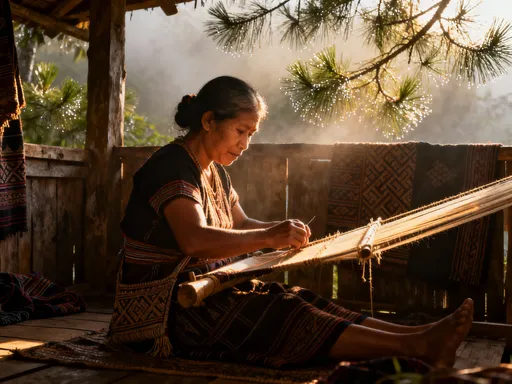
Just as the sea shapes life in Lofoten, so too does the need for warmth and durability. One of the most enduring symbols of this is the lopped, the traditional fisherman’s sweater knitted from tightly spun wool. I visited a small workshop in Henningsvær run by Marte, a weaver and knitter whose family has lived on the islands for generations. Her studio, tucked into a red rorbuer, was filled with skeins of yarn dyed in earthy tones—deep blues from seaweed, rusty reds from lichen, and soft grays from untreated wool.
Marte explained that each pattern in a lopped carries meaning. Geometric motifs represent elements of nature—waves, mountains, snowflakes—while others are family-specific, passed down like heirlooms. The sweaters are not decorative; they are functional, designed to insulate against wind and moisture. “A good lopped can save your life at sea,” she said, holding up a thick, intricately patterned garment. “It absorbs water without losing warmth. It is part of our survival.”
I tried my hand at knitting a simple swatch under her guidance. My stitches were uneven, my tension awkward, but Marte smiled patiently. “It takes years,” she said. “But the act itself is important. When you knit, you are not just making something—you are remembering someone.” Her words resonated. In a world of mass production, the slow, deliberate act of handcrafting is an act of resistance, a way of saying that time and care matter.
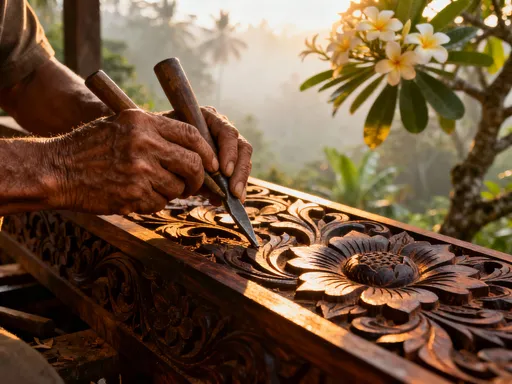
The quiet pride in handmade goods is evident throughout the islands. From carved wooden boats to hand-forged knives, craftsmanship here is not about luxury but about necessity and legacy. These objects are built to last, designed to be used and repaired, not discarded. They carry the imprint of the maker and the story of the user. In Lofoten, to create by hand is to participate in a living tradition—one that values function, beauty, and connection in equal measure.
Voices of the North: Language, Music, and Storytelling
One misty morning, as I walked through a valley near Kabelvåg, I heard a sound that sent chills down my spine—a high, haunting call echoing across the mountains. It was kulning, a traditional herding technique used by women to guide livestock across vast distances. The voice, clear and powerful, seemed to bend the air itself, carrying for miles over the fjords. Though few now rely on herding, kulning endures as a cultural expression, taught in schools and performed at festivals. It is a reminder that sound, too, can be a bridge to the past.
Later that week, I attended a small evening gathering in a community hall where local musicians played the langspil, a traditional Norwegian zither with a soft, resonant tone. The music was simple but evocative, echoing the rhythms of the sea and the wind. An elderly woman sang an old ballad about a fisherman lost at sea, her voice trembling with emotion. No one spoke during the song. When it ended, there was a long silence, filled with shared remembrance.
Oral traditions remain strong in Lofoten, despite the pressures of modernization. Dialects vary from village to village, each with its own vocabulary and pronunciation. Elders still tell stories of storms, shipwrecks, and miraculous returns—tales that blend history with myth. These narratives are not mere entertainment; they are lessons in resilience, warnings about the sea, and affirmations of community. In recent years, local schools and cultural organizations have made efforts to document and teach these traditions, ensuring they are not lost to time.
What I found most moving was the way music and language create a sense of belonging. Even as younger generations move away for education or work, many return during holidays, drawn by the sound of familiar voices and songs. Culture here is not preserved in museums alone—it lives in voices, in melodies, in the way people greet each other on the street. To listen in Lofoten is to hear the pulse of a community that refuses to be silenced.
Seasons That Shape: Experiencing Time Differently
In Lofoten, time is not measured by clocks but by light. During the summer months, the sun never fully sets—the phenomenon known as the midnight sun bathes the islands in golden light for nearly 24 hours a day. Hiking trails remain visible at midnight, children play outside at 10 p.m., and fishermen work late into the evening. This endless daylight creates a sense of boundless possibility, a time for activity, growth, and celebration.
But winter tells a different story. The sun disappears for weeks, replaced by a soft twilight that lasts only a few hours each day. The landscape becomes monochrome—shades of gray, white, and deep blue. Yet this is not a time of dormancy but of inward focus. Families gather around stoves, craftwork intensifies, and storytelling takes center stage. It is also the season of the northern lights, when ribbons of green and purple dance across the sky, casting an ethereal glow over the snow-covered peaks.
I was invited to a solstice gathering in December, a small event hosted by a local cultural group. We met in a historic boathouse, its walls lined with old fishing nets and photographs of long-gone crews. A fire crackled in a metal drum, and everyone brought food—homemade bread, dried fish, berry preserves. We shared stories, sang songs, and toasted the return of the light. There was no fanfare, no performance—just the quiet joy of being together in the dark.
The contrast between seasons shapes not just daily life but cultural values. Summer is for doing, winter for being. The extremes teach patience, adaptability, and gratitude. They remind residents that life is cyclical, that every ending brings a beginning. In a world that glorifies speed and productivity, Lofoten offers a different rhythm—one that honors stillness, reflection, and the quiet passage of time.
Traveling with Respect: How to Engage Authentically
As tourism to Lofoten grows, so does the responsibility to visit with care. The islands are not a theme park but a living community, and travelers must approach them with humility and respect. One of the best ways to do this is by supporting local economies—staying in family-run rorbuer, eating at small coastal kitchens, and purchasing handmade crafts directly from artisans. These choices ensure that tourism benefits residents rather than displacing them.
Visiting outside the peak summer months can also make a difference. The shoulder seasons—spring and autumn—offer fewer crowds, lower prices, and a more authentic glimpse into daily life. Winter, though challenging, reveals a different side of Lofoten, one defined by quiet beauty and community warmth. Hiring local guides not only enhances the experience but ensures that knowledge is shared accurately and respectfully.
Equally important is the practice of listening. In small villages, a simple greeting in Norwegian—“God dag”—can open doors. Asking permission before photographing people or homes shows consideration. Avoiding loud behavior, respecting private property, and following marked trails help preserve both the environment and the peace of the community. Cultural travel is not about collecting experiences but about building understanding.
Ultimately, the goal is not to take from Lofoten but to give back—to leave with more than photographs, to carry forward a sense of connection and responsibility. When done right, travel becomes a form of stewardship, a way of honoring the continuity of a culture that has thrived against the odds.
Conclusion: More Than a Postcard
The Lofoten Islands taught me that true travel is not about seeing the most famous sights or checking destinations off a list. It is about presence—about slowing down, listening deeply, and allowing a place to change you. What I discovered was not a frozen tableau of tradition, but a living, evolving culture that embraces both heritage and change. The fishermen, the knitters, the singers—they are not performing for visitors; they are living their lives with dignity, pride, and quiet strength.
This is a place where every meal is a story, every sweater a memory, and every mountain a witness to centuries of human resilience. To visit Lofoten is to be reminded that beauty is not just something to look at—it is something to participate in. It challenges us to travel not as consumers, but as guests, with gratitude and humility.
As I boarded the ferry to leave, the morning light gilded the peaks once more. I did not feel like I was saying goodbye, but like I was carrying something forward—a deeper understanding of what it means to belong, to preserve, and to live in harmony with nature and community. The islands do not belong in a postcard. They belong in the heart. And they invite us all to seek not just beauty in our travels, but belonging—wherever we may wander.