Through the Lens: Halifax’s Beating Heart in Frame
Ever walked through a city and felt like every corner was begging to be photographed? That’s Halifax for me—its commercial streets aren’t just shopping zones, they’re living galleries. Cobblestones glisten after rain, street musicians sway under historic lamp posts, and café windows tell quiet stories. I grabbed my camera and dove in, chasing authenticity in the everyday hustle. This is more than tourism—it’s visual storytelling at its purest. Through light, shadow, and human rhythm, Halifax reveals itself not just as a destination, but as a narrative unfolding block by block. To photograph its commercial heart is to witness resilience, culture, and charm in motion.
The Urban Canvas: Why Halifax’s Commercial Areas Inspire Photographers
Halifax’s commercial districts are more than economic engines—they are visual symphonies where history, function, and artistry converge. The city’s maritime roots are etched into its architecture, from the weathered red bricks of the Historic Properties to the elegant ironwork of downtown storefronts. These textures, shaped by salt air and generations of footsteps, offer photographers a rich palette of contrast and depth. What sets Halifax apart is not just its beauty, but the way it wears its history openly, inviting the lens to explore layers of time embedded in its streets.
The city’s blend of old and new creates natural visual tension. Along Lower Water Street, a centuries-old warehouse may now house a boutique selling handmade ceramics, its window reflecting both the past and present. These juxtapositions—wooden fishing skiffs moored beside glass-fronted restaurants, vintage signage illuminated by LED lights—are not accidents of urban development, but opportunities for compelling imagery. Photographers find poetry in these contrasts, capturing how Halifax honors tradition while embracing change.
Natural light plays a defining role in shaping the city’s photographic appeal. In the morning, soft eastern light spills across the waterfront, gilding the brass fittings of docked vessels. By afternoon, sunlight filters through the canopy of maple and oak trees on Spring Garden Road, casting dappled patterns on sidewalks. These lighting conditions enhance textures—whether it’s the roughness of stone walls or the smooth glass of modern façades—allowing photographers to emphasize mood and dimension. The city, in this sense, becomes a collaborator in the creative process, offering daily variations in tone and atmosphere.
Equally compelling is the rhythm of pedestrian life. Halifax’s commercial zones pulse with movement: commuters in trench coats rushing past flower stalls, families pausing to feed seagulls by the harbor, seniors sharing benches outside bookshops. These moments, fleeting yet full of character, are the essence of street photography. They reveal not just how people use space, but how they belong to it. When framed thoughtfully, such scenes tell stories of community, routine, and quiet joy—elements that resonate deeply with viewers seeking authenticity in travel imagery.
Waterfront Wonders: Capturing Life Along the Harbour Boardwalk
The Halifax Waterfront is more than a scenic promenade—it is the city’s visual signature, a place where land meets sea in a dynamic display of color, motion, and sound. Stretching over four kilometers along the edge of Halifax Harbour, the boardwalk serves as both a public space and a living stage for photographers. Here, the ordinary becomes extraordinary: a fisherman coiling rope, a child reaching for a balloon, a vendor arranging fresh oysters on ice. Each frame holds the potential for narrative depth, capturing the pulse of a working waterfront that also welcomes millions of visitors each year.
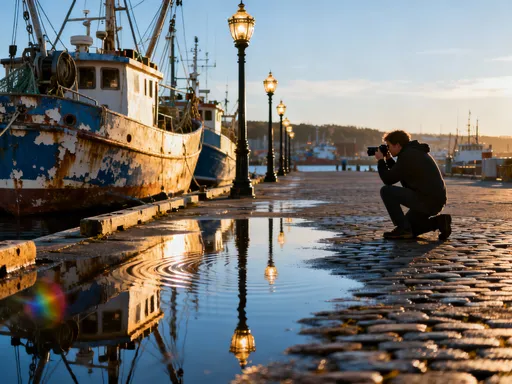
One of the most effective techniques for photographing this area is shooting during golden hour—the period shortly after sunrise or before sunset. During these times, the low angle of the sun casts a warm, diffused glow across the water, softening harsh lines and enhancing reflections. A fishing boat rocking gently in the harbor may appear wrapped in gold, its silhouette mirrored in the wet surface of the boardwalk. This natural lighting not only elevates aesthetic quality but also evokes a sense of tranquility, balancing the inherent energy of the space.
Leading lines are abundant along the waterfront, offering strong compositional tools. The wooden railings, striped buoys, and parallel rows of moored boats guide the viewer’s eye through the image, creating depth and direction. A well-placed shot from the edge of the boardwalk can draw attention toward the distant silhouette of McNabs Island or the sleek lines of a passing ferry. These elements anchor the photograph in place, giving it a sense of location and scale.
Equally powerful are the candid moments that unfold organically. At the Halifax Seaport Farmers’ Market, vendors arrange baskets of apples, jars of honey, and bundles of fresh herbs with care, their hands telling stories of craftsmanship and seasonality. Capturing these details—close-ups of calloused fingers adjusting a sign, or steam rising from a kettle at a food stall—adds intimacy to the visual narrative. Such images do not merely document a place; they honor the people who sustain it.
The saltwater swimming pool, a beloved summer fixture, offers another layer of human interest. Families gather at its edges, children splash in the filtered ocean water, and lifeguards keep watch from elevated chairs. These scenes radiate warmth and community, ideal for storytelling through sequence photography. A series of shots—arrival, play, rest, departure—can mirror the rhythm of a day, turning a simple location into a chapter in a larger visual essay about urban life and leisure.
Spring Garden Road: Light, Layers, and Local Flavor
Just a short walk from the waterfront, Spring Garden Road presents a different facet of Halifax’s commercial spirit—one defined by greenery, architectural variety, and a slower, more deliberate pace of life. Tree-lined and pedestrian-friendly, this corridor balances urban convenience with neighborhood charm. Photographers are drawn to its layered compositions: ivy-covered walls, colorful awnings, bicycles leaning against wrought-iron fences, and seasonal displays in shop windows. Unlike the expansive vistas of the harbor, Spring Garden Road invites intimacy, rewarding those who look closely.
Light behaves differently here, filtered through leaves and reflected off painted brick. In spring and summer, the canopy creates shifting patterns of shadow and brightness, ideal for black-and-white photography that emphasizes contrast and form. A mannequin in a boutique window, partially obscured by dappled sunlight, can become a study in abstraction. Similarly, the interplay of artificial and natural light—such as a neon sign glowing faintly in daylight—adds complexity to color compositions.
Street-level details abound. A flower shop may display peonies and lavender in galvanized buckets, their colors echoing the pastel hues of nearby buildings. A barista hands a paper cup through a café window, steam curling into the cool morning air. These moments, though brief, carry emotional weight. They speak to the rituals of daily life—small acts of connection and care that define a community. When captured with intention, they become universal, resonating with viewers regardless of where they live.
Photographing people in public spaces requires sensitivity. While Halifax is generally welcoming, photographers must respect personal boundaries. Rather than intrusive close-ups, consider wider shots that include individuals as part of the environment—a woman reading on a bench, a dog waiting outside a bookstore. These images preserve dignity while still conveying atmosphere. In some cases, a simple smile and nod can open the door to a portrait, transforming a stranger into a collaborator in the story.
Seasonal changes further enrich the visual narrative. In autumn, fallen leaves carpet the sidewalks in red and gold, contrasting with the deep green of hedges. Winter brings a quiet transformation—frosted glass, woolen scarves, and holiday lights strung between lampposts. Each season offers a distinct mood, allowing photographers to return again and again, seeing the same street with fresh eyes.
Gottingen Street: Culture in Motion
Once a neglected stretch of downtown, Gottingen Street has emerged as one of Halifax’s most dynamic cultural corridors. This evolution is not hidden—it is painted on walls, performed on sidewalks, and served in cafés. For photographers, the street offers a front-row seat to urban renewal, where change is not imposed from above, but grown from within. Art galleries, music venues, and community spaces now thrive alongside long-standing businesses, creating a tapestry of continuity and transformation.
Murals are among the most striking visual elements. Painted by local artists, many honor Halifax’s African Nova Scotian heritage, depicting historical figures, cultural symbols, and messages of resilience. These works are not mere decoration; they are acts of remembrance and affirmation. Photographing them requires attention to context—capturing not just the image, but the environment around it. A mural of a jazz musician, for example, gains depth when framed with the awning of a nearby café where live music plays on weekends.
The Bus Stop Theatre, a cornerstone of independent performance in the city, often spills creativity onto the sidewalk. Performers rehearse in doorways, posters advertise upcoming shows, and audiences gather before curtain time. These moments, rich with anticipation and expression, are ideal for candid photography. A dancer stretching on the steps, a playwright reviewing notes under a streetlamp—each contributes to the street’s identity as a stage for emerging voices.
Respect is essential when documenting such spaces. Gottingen Street is not a backdrop; it is a lived-in community. Photographers should approach with humility, avoiding sensationalism or exoticism. The goal is not to capture “before and after” contrasts that imply past deficiency, but to highlight ongoing vitality and pride. A diner that has served meals for decades deserves the same attention as a new art installation—both are threads in the same fabric.
Events like the Nocturne Art at Night festival transform the street into an open-air gallery, with installations, projections, and performances drawing thousands. These occasions offer rare opportunities to photograph light in motion—lanterns floating down the sidewalk, shadows dancing on brick walls, crowds moving like a single organism. Such images, taken with wide-angle lenses and slower shutter speeds, convey energy and participation, turning viewers into witnesses of collective celebration.
The Art of Timing: When to Shoot for Maximum Impact
Even the most photogenic locations require the right moment to reveal their full potential. In Halifax, timing is not just about light—it is about rhythm, weather, and human flow. Early mornings offer solitude and clarity. The waterfront, usually bustling by 10 a.m., is often quiet before 8 a.m., with only joggers, dog walkers, and early fishermen present. This stillness allows for clean compositions, uncluttered by crowds. Mist rising off the harbor, empty benches, and dew-covered railings create a meditative mood, ideal for minimalist or reflective photography.
Midday, though often dismissed for its harsh light, brings energy. This is when Halifax’s commercial life peaks—delivery trucks unload crates, shopkeepers rearrange displays, and tourists fill the boardwalk. While direct sunlight can create strong contrasts, it also emphasizes color and texture. A red lobster pot, a yellow awning, a cobalt-blue door—these hues pop under bright conditions. Using a polarizing filter can reduce glare on windows and water, enhancing saturation without digital manipulation.
Dusk marks a transformation. As the sun sets, artificial lighting takes over—neon signs flicker on, café windows glow warmly, and streetlamps cast amber pools on wet pavement. This transition period, known as blue hour, lasts only 20 to 30 minutes but offers some of the most atmospheric shots. The sky turns deep indigo, contrasting with the golden interiors of restaurants, creating a cinematic quality. Long exposures can capture light trails from passing cars or the gentle motion of waves, adding dynamism to static scenes.
Weather, often seen as a challenge, can be a creative ally. Rain softens edges, creates reflections, and brings out rich colors in brick and paint. A puddle on the boardwalk can mirror the sky and buildings, doubling the visual interest. Fog, common in coastal areas, adds mystery and depth, obscuring distant elements and focusing attention on foreground details. A lone figure walking through mist on the waterfront becomes a symbol of solitude and journey.
Seasonal timing also matters. Spring brings fresh blooms and renewed activity; summer offers long daylight hours and festivals; fall provides dramatic color shifts; winter delivers stillness and contrast. Photographers who visit repeatedly can build a comprehensive portrait of the city, one that reflects its cyclical nature and enduring spirit.
Gear That Fits the Vibe: Practical Photography Tools for City Walks
Exploring Halifax’s commercial districts does not require a heavy kit. In fact, mobility and discretion often yield better results than technical complexity. A lightweight mirrorless camera with a prime lens—such as a 35mm or 50mm—offers excellent image quality while remaining unobtrusive. These lenses perform well in varied lighting, produce pleasing depth of field, and encourage photographers to move closer, engaging more deeply with their subjects.
For those prioritizing convenience, modern smartphones are surprisingly capable. High-resolution sensors, portrait modes, and advanced HDR processing allow for professional-looking results, especially when paired with thoughtful composition. The advantage of a phone is its invisibility—people are less likely to react when they see a device they use daily. This can lead to more natural, unstaged moments.
Editing apps enhance the coastal aesthetic. Halifax’s light is often cool and soft, with subtle blues and grays. Apps like Lightroom Mobile or Snapseed allow for precise adjustments—increasing contrast, fine-tuning white balance, or selectively brightening shadows. These tools help bring out the mood of a scene without distorting reality. The goal is not perfection, but authenticity—preserving the feeling of being there.
Accessories should support, not hinder. A compact tripod can stabilize long exposures during blue hour, while a weather-resistant bag protects gear during sudden showers. A simple neck strap keeps the camera within reach, ready for spontaneous shots. Some photographers prefer using a single lens for an entire outing, limiting choices to sharpen focus and intention. This minimalist approach often leads to more cohesive visual stories.
Ultimately, the best gear is the one that allows you to stay present. Halifax rewards observation—waiting for a laugh, following a shadow, noticing how light changes over ten minutes. The equipment should serve that awareness, not distract from it. Whether using a DSLR or a phone, the most powerful tool remains the photographer’s eye and heart.
From Snap to Story: Curating Your Halifax Series
Photography in Halifax’s commercial zones is not about accumulating images, but about crafting a narrative. A single powerful shot can resonate, but a curated series tells a deeper story—one of place, people, and pulse. The process begins with selection: reviewing hundreds of images to identify those that share a common thread. Is it light? Movement? Resilience? Joy? The best collections emerge from a clear vision, not random capture.
Sequencing matters. A strong series often follows a rhythm—wide establishing shots, followed by medium scenes of activity, then intimate details. Imagine opening with a sunrise over the harbor, moving to a vendor arranging strawberries at the farmers’ market, then closing with an elderly couple sharing tea at a waterfront bench. This arc mirrors a day, creating emotional continuity. Alternatively, a thematic series might focus on reflections—water, glass, metal—unifying diverse locations through a single visual idea.
Titles and captions, when used, should enhance, not explain. A simple phrase like “Morning Rituals” or “Harbor Light, 6:42 AM” adds context without overstatement. The images should speak first; words serve as gentle guides. For digital presentations, consider pacing—allowing viewers to linger on each frame, absorbing mood and detail.
Sharing the work extends the story. Whether in a personal blog, a community exhibit, or a social media album, photographs can spark conversation and connection. They remind others—and ourselves—of the beauty in everyday spaces. More importantly, they honor the city not as a static postcard, but as a living, breathing entity shaped by those who walk its streets.
To photograph Halifax’s commercial heart is to participate in its story. It is to notice the fisherman mending his net, the artist painting a mural, the child pressing her nose to a bakery window. These moments, small and fleeting, are the essence of a city’s soul. Through the lens, we do not just record—we remember, we celebrate, we belong. And in that act, we invite others to see not just a place, but a people, a rhythm, a life in motion.