You Won’t Believe What Frankfurt’s Skyline Hides
Frankfurt isn’t just Germany’s financial hub—it’s a city where steel giants meet medieval charm. I was stunned to discover how its skyline, packed with futuristic towers, stands just minutes from cobblestone alleys and half-timbered houses. Exploring on foot, I found myself constantly turning corners that revealed unexpected contrasts. This city doesn’t just blend old and new—it redefines urban architecture in ways you have to see to believe. Let me take you through the real story behind its bold skyline.
First Impressions: A Skyline That Defies Expectations
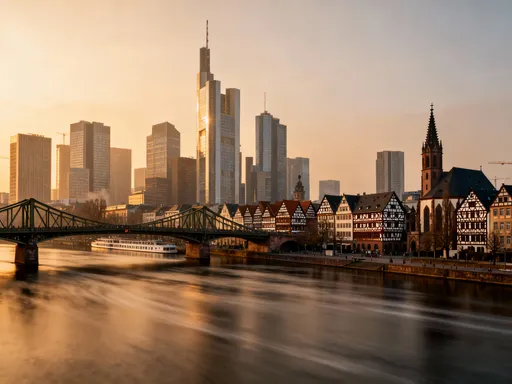
Arriving in Frankfurt by train or air, the first thing that strikes visitors is its unmistakable skyline. Unlike any other German city, Frankfurt rises with a cluster of gleaming high-rises that stretch toward the clouds, earning it the affectionate nickname "Mainhattan"—a fusion of the Main River and Manhattan. This concentration of skyscrapers is an anomaly in a country where historic preservation often limits vertical development. Yet here, in the heart of Europe, a financial powerhouse has built an urban forest of glass and steel without erasing its past.
The financial district pulses with architectural ambition. Towering above the rest is the Commerzbank Tower, once the tallest building in Europe when it opened in 1997. Standing at 259 meters, its triangular shape and sky bridges give it a distinctive profile. Nearby, the Messeturm reaches 257 meters, its sleek, tapered design a hallmark of 1990s modernism. More recently, the European Central Bank’s twin towers have added a bold contemporary statement to the skyline, their angular forms symbolizing economic stability and forward vision.
What makes Frankfurt’s skyline truly unique is not just the presence of tall buildings, but their coexistence with a deeply rooted historical identity. While cities like Berlin or Munich prioritize low-rise development to preserve traditional aesthetics, Frankfurt embraced vertical growth as both a necessity and a symbol of progress. The result is a rare urban landscape where stockbrokers in tailored suits walk past timber-framed taverns that date back centuries. This duality is not accidental—it’s a deliberate expression of how modernity and memory can thrive side by side.
For visitors, the contrast begins the moment they step out of Frankfurt’s central station. To the west, the glass facades of the banking quarter shimmer in the sunlight; to the east, the spires of the old town beckon. The transition between these worlds is seamless, often requiring only a ten-minute walk. This proximity allows travelers to experience both the pulse of global finance and the quiet dignity of centuries-old craftsmanship within a single afternoon. Few cities in the world offer such a vivid architectural dialogue, making Frankfurt a must-see destination for those who appreciate how cities evolve without losing their soul.
The Heart of Tradition: Römerberg and the Old Town Revival
Just a short walk from the financial district lies Römerberg, Frankfurt’s historic heart and one of its most photogenic squares. Lined with colorful half-timbered houses and dominated by the Römer, the city’s medieval town hall, this area feels like a step back in time. The Römer itself is a composite of several 15th-century buildings that have served as Frankfurt’s seat of government for over 600 years. Its asymmetrical gables and ornate facades reflect the city’s long-standing civic pride and its role as a center of imperial politics in the Holy Roman Empire.
What many visitors don’t realize is that much of what they see today is a meticulous reconstruction. Like many European cities, Frankfurt suffered extensive damage during World War II, and the old town was almost entirely destroyed. For decades, the area remained a mix of modernist structures and open plazas. But in the 2010s, the city launched the Dom-Römer Project, an ambitious urban renewal initiative aimed at restoring the historic footprint of the district between the Frankfurt Cathedral and the Römer.
The project rebuilt 35 buildings using traditional designs based on historical records, paintings, and archaeological findings. While the interiors are modern and functional, the exteriors replicate the pre-war streetscape with remarkable accuracy. This careful revival was not about creating a theme park, but about reweaving the fabric of the city’s identity. The reconstructed houses now house cafes, boutiques, and cultural spaces, ensuring that the area remains vibrant and lived-in rather than a static museum exhibit.
One of the most striking aspects of the Römerberg is how seamlessly the old and new coexist. Solar panels are discreetly integrated into rooftops, and energy-efficient windows maintain thermal performance without disrupting the visual harmony. The cobblestone streets are wheelchair-accessible, and information plaques in multiple languages help visitors understand the historical significance of what they’re seeing. This balance of authenticity and modernity reflects Frankfurt’s broader architectural philosophy: honoring the past doesn’t mean rejecting progress—it means integrating it thoughtfully.
Crossing the Main: Bridges as Architectural Statements
The Main River divides Frankfurt into distinct character zones, and crossing it is more than just a commute—it’s an architectural experience. The Alte Brücke, or Old Bridge, is one of the city’s most beloved pedestrian crossings. Originally built in the 13th century and rebuilt in the 1920s, it spans the river with a graceful arc, offering panoramic views of both the skyline and the historic Altstadt. As you walk across, the juxtaposition of centuries becomes vivid: on one side, the Commerzbank Tower glints in the distance; on the other, the spire of the Frankfurt Cathedral rises above red-tiled roofs.
Bridges in Frankfurt are not merely functional—they are statements of design and connection. The modern Eiserner Steg (Iron Footbridge), rebuilt after wartime destruction, links the Museumsufer with the south bank and is especially popular at sunset, when the river reflects the golden light bouncing off the skyscrapers. Further downstream, the newer Hühnermarkt Bridge features sleek steel railings and minimalist lighting, blending contemporary aesthetics with urban practicality.
From the river level, the city’s architecture takes on a new dimension. Boats cruising along the Main offer a unique vantage point, revealing how buildings interact with water and sky. The reflection of glass towers on the river’s surface creates a dreamlike effect, as if the city is floating between earth and air. For photographers and casual observers alike, a river cruise or a riverside walk provides one of the most rewarding ways to appreciate Frankfurt’s layered identity.
Recommended walking routes often begin at the Alte Brücke, continue along the northern bank past the Opera House, and loop back via the Eiserner Steg. This path allows visitors to experience the full spectrum of Frankfurt’s architectural evolution—from medieval, to baroque, to modernist, to postmodern. Signage along the way provides historical context, and benches at intervals invite moments of pause and reflection. In a city that moves at a fast pace, these quiet riverside stretches offer a chance to slow down and truly see.
Museumsufer: Where Culture Meets Creative Design
Along the southern bank of the Main River lies the Museumsufer, or Museum Embankment, a cultural corridor that hosts over a dozen museums within a compact stretch. What makes this area remarkable is not just the quality of its collections, but the diversity of its architecture. Each museum building is a unique expression of design, reflecting the institution’s mission and historical context. From classical revival styles to cutting-edge contemporary forms, the Museumsufer is a living gallery of architectural evolution.
One standout is the Städel Museum, Germany’s premier art museum, which underwent a significant expansion in 2012. The underground extension, designed by Schneider+Schumacher, is a marvel of modern engineering. Visitors descend via a gently sloping corridor into a subterranean gallery space that maintains optimal lighting and climate conditions for delicate artworks. The building’s low profile ensures it doesn’t compete with the historic villa above, yet its innovative design speaks to Frankfurt’s commitment to forward-thinking cultural infrastructure.
Equally impressive is the Jewish Museum, housed in a striking black granite building that stands in quiet contrast to its neighbors. The design incorporates symbolic elements, such as a fractured Star of David in the courtyard, to reflect both loss and resilience. Inside, the exhibits trace Jewish life in Frankfurt from the Middle Ages to the present, offering a deeply moving narrative that resonates with both local and international audiences.
Other notable structures include the Museum of Applied Arts, with its ornate 19th-century façade, and the German Film Museum, located in a repurposed villa that blends old-world elegance with modern exhibition technology. What unites these institutions is their architectural intentionality—each building enhances the visitor’s experience by creating a dialogue between form and function. For travelers interested in culture and design, combining a museum visit with an appreciation of the buildings themselves adds a rich, multi-sensory layer to the experience.
The Museumsufer is also family-friendly, with interactive exhibits, guided tours, and seasonal events like the Museumsufer Festival, when the entire embankment comes alive with music, food, and open-air performances. Public transportation makes the area easily accessible, and many museums offer discounted or free admission on certain days. Whether you’re an art lover, history buff, or architecture enthusiast, this riverside stretch offers something meaningful and memorable.
Hidden Gems: Offbeat Buildings Beyond the Center
While the skyline and old town draw the most attention, Frankfurt’s architectural depth unfolds further afield in neighborhoods like Westend and Sachsenhausen. These districts reveal a different side of the city—one shaped by post-war reconstruction, social housing experiments, and enduring respect for design integrity. Walking through Westend, you’ll encounter elegant pre-war villas, Bauhaus-inspired apartment blocks, and green courtyards that suggest a quieter, more residential rhythm.
Sachsenhausen, located south of the river, is known for its traditional apple wine taverns, but it also boasts a rich architectural tapestry. Scattered among the cozy inns are early 20th-century buildings with intricate stucco work and Art Nouveau details. The area was heavily damaged in the war, but its reconstruction prioritized human-scale design, resulting in a neighborhood that feels intimate and walkable. Here, architecture serves community life rather than corporate ambition.
One lesser-known landmark is the Goethe House, the reconstructed birthplace of Germany’s most famous writer. Though the original was destroyed, the 1950s reconstruction follows historical plans with great care. Inside, period furnishings and personal artifacts offer a glimpse into 18th-century bourgeois life. The house stands as a quiet tribute to cultural legacy, tucked away on a narrow street lined with plane trees.
Another architectural curiosity is the IG Farben Building, now part of Goethe University. Completed in 1931, it was once the largest office building in Europe and a symbol of industrial might. Its massive scale and neoclassical elements reflect the architectural trends of the Weimar Republic. Today, it houses academic departments and serves as a reminder of how buildings can be repurposed to serve new generations. Guided tours occasionally explore its history, offering insights into both its architectural significance and complex past.
These offbeat sites reveal that Frankfurt’s identity isn’t defined solely by its towers or its reconstructed old town. It’s also shaped by residential neighborhoods, educational institutions, and everyday spaces where people live, study, and gather. Venturing beyond the postcard views allows visitors to appreciate the city’s full complexity—a place where history, memory, and modernity are continuously negotiated.
Sustainable Skyscrapers: Green Design in a Concrete Jungle
In a city known for its glass giants, sustainability might seem like an afterthought. But Frankfurt has emerged as a leader in eco-conscious high-rise design, proving that environmental responsibility and architectural ambition can go hand in hand. The Commerzbank Tower is a prime example. Designed by Sir Norman Foster, it was one of the first skyscrapers in the world to incorporate a central atrium that allows natural ventilation throughout the building. This innovative feature reduces reliance on mechanical heating and cooling, cutting energy consumption by up to 30% compared to conventional towers.
The building also features automated windows that open and close based on indoor air quality, as well as energy-efficient lighting and water recycling systems. Its triangular layout maximizes daylight penetration, reducing the need for artificial light. These design choices were groundbreaking in the 1990s and remain influential today. The Commerzbank Tower isn’t just a symbol of financial power—it’s a model of intelligent, sustainable engineering.
Frankfurt’s commitment to green architecture extends beyond individual buildings. The city has implemented strict energy standards for new construction, promotes the use of renewable materials, and encourages the integration of green roofs and urban gardens. In the Europaviertel, a former railway yard transformed into a mixed-use district, entire blocks are designed with sustainability in mind—featuring energy-efficient facades, rainwater harvesting, and extensive pedestrian zones.
Public access to green spaces is also a priority. Parks like the Palmengarten and the Grüneburgpark offer lush retreats within the urban core, while smaller plazas and rooftop terraces provide breathing room amid the concrete. Even in the financial district, you’ll find trees planted along sidewalks and green walls attached to building exteriors. These elements do more than beautify the city—they improve air quality, reduce the urban heat island effect, and enhance residents’ well-being.
Looking ahead, Frankfurt continues to shape its skyline with sustainability in mind. New developments are required to meet high environmental benchmarks, and the city actively participates in European urban sustainability networks. For visitors, this means that the modernity they admire is not just aesthetic—it’s ethical. Seeing how a financial capital embraces green innovation offers hope and inspiration for cities worldwide.
Walking the City: Best Routes to Experience Architectural Contrast
To fully appreciate Frankfurt’s architectural duality, there’s no substitute for walking. The city is compact, well-signposted, and pedestrian-friendly, making self-guided tours both easy and rewarding. One of the most satisfying routes begins at Hauptwache, a central square that embodies the city’s blend of old and new. Here, a historic column marks the site of a former city gate, while sleek shopping arcades and modern office buildings surround it.
From Hauptwache, head east toward Römerberg, passing through the Zeil, Frankfurt’s main shopping street. Though lined with international brands, the street retains architectural interest with its mix of early 20th-century facades and contemporary storefronts. As you approach the old town, the atmosphere shifts—cars give way to cobblestones, and the sound of footsteps echoes against timber-framed walls.
After exploring Römerberg, continue south across the Eiserner Steg to the Museumsufer. This path offers a gradual transition from medieval to modern, with each step revealing a new layer of the city’s story. On the south bank, you can choose to visit one or more museums or simply stroll along the river, watching boats drift by and towers rise in the distance.
Another excellent route runs from Eschenheimer Tor, a preserved medieval gate now surrounded by high-rises, to the Westend district. This journey traces a timeline of urban development—from 14th-century fortifications to 1950s reconstruction to 21st-century sustainability. Along the way, you’ll pass quiet residential streets, university buildings, and hidden courtyards that showcase Frankfurt’s human scale.
Public transportation enhances the walking experience. The U-Bahn and S-Bahn systems are efficient and clean, allowing visitors to skip less interesting stretches and focus on key architectural zones. Information kiosks and mobile apps provide maps and historical facts, making it easy to customize your tour. Whether you have two hours or two days, Frankfurt rewards the curious traveler with endless discoveries.
Frankfurt’s architectural duality isn’t accidental—it’s intentional, bold, and deeply reflective of Germany’s ability to honor the past while embracing the future. This city proves that innovation doesn’t erase history; it can elevate it. Whether you're drawn to soaring towers or centuries-old timber frames, Frankfurt invites you to look closer, walk farther, and see how contrast can create harmony. The real magic isn’t in any single building—it’s in the conversation between them.