Bali’s Soul in Every Brushstroke: Where Art Lives Beyond the Postcard
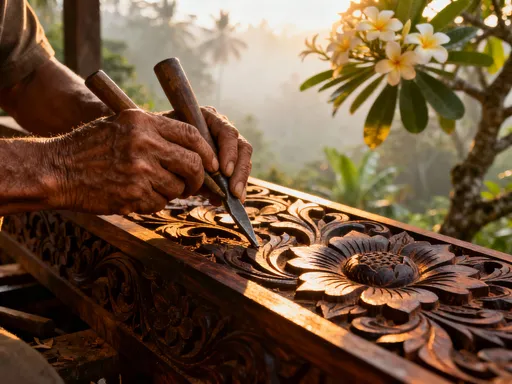
You know that Bali isn’t just beaches and rice terraces, right? I didn’t either—until I wandered into a quiet compound in Ubud and found an artist carving stories into wood like they were memories. This island breathes art, not just as decoration, but as daily ritual. From temple offerings shaped with care to murals that pulse with meaning, Bali’s creative spirit is everywhere—hidden in plain sight, waiting to be truly seen. It’s in the curve of a dancer’s hand, the precision of a painted eye, the rhythm of chisels meeting wood at dawn. To understand Bali is to witness how art and life are not separate threads, but woven tightly into one sacred fabric. This is not tourism for the eyes alone—it’s a journey for the soul.
The Living Canvas: Understanding Bali’s Artistic Identity
Bali’s artistic identity cannot be fully grasped through galleries or souvenirs alone. It is a living tradition, deeply embedded in the island’s spiritual and social rhythms. At its core lies the Balinese Hindu philosophy of Tri Hita Karana, which emphasizes harmony among three realms: with the divine, with fellow humans, and with nature. This guiding principle shapes not only daily rituals but also the island’s vast creative output. Art in Bali is not made for fame or profit—it is an offering, a form of devotion, and a means of maintaining balance in the universe. Whether it is a delicately arranged canang sari—a small daily offering placed on doorsteps, streets, and shrines—or the intricate reliefs adorning temple walls, every artistic gesture carries intention and meaning.
The canang sari, for instance, may appear simple to the untrained eye—a small palm-leaf basket filled with flowers, rice, and incense. Yet each color of flower represents a different deity: white for Iswara, red for Brahma, yellow for Mahadeva, and blue or green for Vishnu. The arrangement itself is a microcosm of balance and gratitude. These offerings are renewed each morning by women in households across the island, a quiet but powerful act of creativity rooted in faith. Similarly, temple carvings depict scenes from the Ramayana and Mahabharata, epics passed down through generations. These are not merely decorative; they are visual sermons, teaching moral lessons and preserving cultural memory.
Even traditional dance and music are forms of artistic worship. The Legong, performed by young girls in ornate gold costumes, tells stories of love, loyalty, and divine intervention through precise hand gestures and facial expressions. Every movement is codified, every rhythm meaningful. This integration of art into spiritual life ensures that creativity is not isolated to artists alone—it belongs to the entire community. As a result, Balinese art is never stagnant; it evolves within boundaries of tradition, sustained by a collective sense of purpose. To witness it is to understand that in Bali, beauty is not optional—it is essential to life itself.
Ubud: The Heartbeat of Bali’s Art Scene
If Bali has a cultural pulse, it beats strongest in Ubud. Nestled in the central highlands, surrounded by emerald rice fields and jungle-clad hills, Ubud has long been the island’s artistic epicenter. Its reputation as a haven for creativity dates back to the 1930s, when the royal family of Ubud actively supported local artists and welcomed foreign influences. This openness gave rise to the Pita Maha movement, a pioneering initiative co-founded by Balinese royalty and Western artists like Walter Spies and Rudolf Bonnet. Their goal was not to commercialize art but to preserve its authenticity while encouraging innovation. Through Pita Maha, artists received fair compensation, training, and exhibition opportunities, laying the foundation for Bali’s modern art economy.
Today, Ubud remains a magnet for creators and connoisseurs alike. The town’s narrow lanes are lined with galleries, studios, and craft shops, each offering a glimpse into the island’s artistic soul. The Neka Art Museum, established by Balinese art patron Pande Ketut Neka, presents a comprehensive collection spanning traditional Kamasan-style paintings to contemporary experimental works. One wing is dedicated entirely to foreign artists who lived and worked in Bali, illustrating the island’s long-standing role as a cross-cultural muse. Similarly, the Agung Rai Museum of Art (ARMA) offers not just exhibitions but workshops, performances, and lectures, fostering a dynamic exchange between past and present.
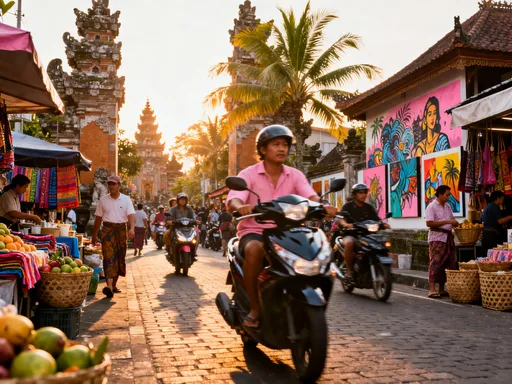
What makes Ubud unique is its ability to honor tradition while embracing evolution. Visitors can watch a gamelan rehearsal in a temple courtyard in the morning and attend a modern dance performance at ARMA in the evening. Art markets like the Ubud Art Market provide access to handmade textiles, silver jewelry, and wood carvings, though discerning buyers learn to distinguish mass-produced items from authentic craftsmanship. The town’s cafes and bookstores often double as informal galleries, where local painters display their work. Ubud does not merely showcase art—it lives it, breathes it, and invites others to do the same.
Beyond Ubud: Hidden Art Communities Across the Island
While Ubud captures much of the spotlight, Bali’s artistic spirit flourishes far beyond its borders, in quiet villages where craftsmanship is a family legacy. These communities may lack the foot traffic of Ubud, but they offer a deeper, more intimate encounter with Balinese artistry. Take Batuan, a village in the south known for its highly detailed narrative paintings. Batuan artists specialize in dark, densely layered compositions filled with mythological figures, demons, and scenes of daily life. The style emerged in the 1930s as a response to tourism, yet it remains deeply rooted in Balinese cosmology. A single painting can take weeks to complete, with artists using fine brushes made from squirrel hair to render intricate details.
Another renowned center is Mas, a village nestled in the foothills near Ubud, celebrated for its wood carving. Here, generations of sculptors have passed down techniques for shaping sacred figures, temple doors, and ceremonial masks. The scent of sandalwood and teak fills the air in family-run workshops, where apprentices learn by observing masters. Visitors are often welcomed into these spaces, not as customers but as guests. A simple greeting and respectful demeanor can open the door to conversation, even a demonstration of the carving process. These interactions reveal the humility and dedication behind each piece—art made not for applause, but as a continuation of duty and devotion.
Other villages contribute their own specialties: Celuk for silverwork, where artisans hammer delicate floral patterns into jewelry; Tenganan for geringsing, a double-ikat textile dyed with natural pigments and woven over months; and Penglipuran, where bamboo craftsmanship supports both daily life and ritual. These communities face challenges, including competition from factory-made imitations and the pressures of land development. Yet many have formed cooperatives to protect their craft, ensuring fair wages and quality control. Travelers who seek them out support not just an economy but a cultural legacy. To visit these villages is to step off the postcard and into the quiet heart of Bali’s artistry.
Contemporary Expressions: When Tradition Meets Innovation
Balinese art is often perceived as timeless, even unchanging—but this is a misconception. Today’s artists are not merely preserving the past; they are reinterpreting it for a new era. In studios and galleries across the island, a quiet revolution is underway, where ancestral motifs meet modern mediums and global concerns. This evolution is not a departure from tradition but an expansion of it, guided by the same principles of balance and meaning. Artists are exploring themes like environmental degradation, cultural identity, and spiritual resilience, using methods that range from recycled-material sculptures to digital projections.
Spaces like Bentara Budaya in Gianyar and Biasa ArtSpace in Seminyak serve as platforms for this new wave. Bentara Budaya, housed in a traditional Balinese compound, hosts rotating exhibitions that juxtapose classical painting with experimental installations. One recent exhibit featured a life-sized sculpture of a whale made entirely from ocean plastic, its body inscribed with Balinese script—a powerful commentary on pollution and sacred duty. Biasa ArtSpace, founded by Italian designer Elisa Pervinca Bellini, champions emerging Balinese talent, often pairing local artists with international curators. Here, one might find a canvas depicting the goddess Durga rendered in neon colors or a video art piece blending Legong dance with urban soundscapes.
What unites these contemporary works is not style but intention. Even when the form is modern, the spirit remains rooted in Balinese values. Artists speak of their work as a form of prayer, a way to process change without losing identity. Some incorporate traditional symbols—like the kalpataru tree of life or the barong spirit—into abstract compositions. Others collaborate with elders to ensure their interpretations remain respectful. This dialogue between generations ensures that innovation does not mean erasure. For the discerning traveler, engaging with contemporary art offers a deeper understanding of Bali’s present—and its future.
Art as Experience: Participating, Not Just Observing
To truly connect with Balinese art, one must move beyond observation and step into participation. The island offers numerous opportunities for hands-on engagement, allowing visitors to learn directly from artisans and gain insight into the discipline behind the beauty. These experiences are more than tourist activities—they are acts of cultural exchange, fostering appreciation and respect. Whether it’s painting a simple wayang mask, hammering silver into a ring, or dipping fabric into indigo dye, the act of creation builds empathy and memory far deeper than any photograph.
One of the most rewarding experiences is a traditional painting class in Batuan or Ubud. Under the guidance of a local master, participants learn the symbolic meanings behind common motifs—the lotus for purity, the dragon for protection, the peacock for wisdom. The process is meditative, requiring patience and precision. Similarly, silver-smithing workshops in Celuk teach the basics of forging, soldering, and polishing, with many studios offering half-day sessions that result in a wearable keepsake. In Penglipuran, families can try their hand at bamboo weaving, crafting small baskets or decorative items while learning about the plant’s role in ceremonies and construction.
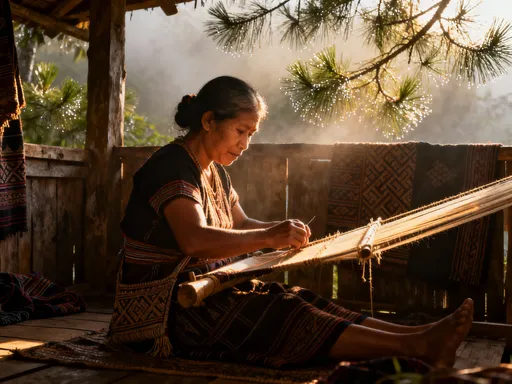
For those interested in textiles, batik and ikat workshops in Gianyar and Tenganan provide insight into one of Bali’s oldest art forms. The process is labor-intensive: designing patterns, applying wax, dyeing fabric, and repeating the cycle multiple times. Participants leave not only with a piece of cloth but with a new understanding of time, effort, and cultural continuity. When choosing a workshop, it’s important to seek out ethical providers—those that employ local artisans, pay fair wages, and emphasize education over mass production. Many community cooperatives now offer certified programs, ensuring that tourism supports sustainability rather than exploitation. By learning with intention, travelers honor the art and the artist alike.
Navigating the Art Market: From Markets to Museums
For many visitors, the desire to bring a piece of Bali home is strong—but the art market can be overwhelming. From bustling night markets to upscale galleries, the range of options is vast, but so is the risk of purchasing mass-produced imitations. Understanding how to navigate this landscape is essential for making meaningful, ethical choices. The key lies in distinguishing between souvenir and art, between commodity and craft. Authentic Balinese art carries the mark of the maker, the weight of tradition, and the evidence of time invested.
Local markets, such as the Ubud Art Market or Sukawati Art Market, offer affordability and variety, but require discernment. Hand-carved wooden masks, for instance, should show asymmetry and fine detailing—signs of human touch—rather than the uniformity of machine production. Paintings done on canvas with natural pigments and intricate brushwork are more likely to be genuine than those printed on fabric. When in doubt, ask questions: Where was this made? Who made it? How long did it take? Reputable sellers are often happy to share this information. Additionally, purchasing from cooperatives or fair-trade shops supports community-based initiatives and ensures fair compensation.
For higher-value acquisitions, galleries and museums provide greater assurance of authenticity. The Neka Art Museum, ARMA, and Bentara Budaya all operate retail spaces that sell works directly from artists or estates. These venues often include certificates of authenticity and background information about the creator. When visiting, it’s wise to allow time—arrive early to avoid crowds, and consider hiring a local guide who can interpret styles and histories. Entry fees are typically modest, and proceeds often fund educational programs. Whether buying a small offering tray or a large sculpture, the goal should be connection, not collection. A single, meaningful piece, chosen with care, becomes a lasting reminder of Bali’s living art.
Preserving the Spirit: Challenges and the Path Forward
Despite its enduring beauty, Bali’s artistic heritage faces growing challenges. Rapid tourism development, environmental pressures, and the rise of mass production threaten the authenticity and sustainability of traditional crafts. In some villages, younger generations are choosing urban careers over apprenticeships in wood carving or weaving, leading to concerns about the transmission of knowledge. Meanwhile, the demand for souvenirs has led to the proliferation of factory-made imitations, often sold as handmade. These trends risk reducing Balinese art to mere decoration, stripping it of its spiritual and cultural significance.
Yet there is hope. Across the island, educators, artists, and community leaders are working to preserve and revitalize traditional practices. Schools now incorporate art and dance into their curricula, ensuring that children grow up with an appreciation for their heritage. Cooperatives are empowering artisans with business skills, marketing support, and access to global audiences through e-commerce. Environmental initiatives are promoting the use of sustainable materials—such as bamboo and natural dyes—aligning artistic practice with ecological responsibility. These efforts are not about freezing art in time but about ensuring it continues to thrive in a changing world.
Travelers have a vital role to play in this preservation. By choosing to engage mindfully—with respect, curiosity, and intention—they become stewards of culture rather than passive consumers. This means taking the time to learn, to ask questions, to support ethical enterprises, and to resist the temptation of quick, cheap souvenirs. It means attending a temple ceremony with quiet reverence, or sitting through an entire gamelan performance instead of just snapping a photo. It means seeing Balinese art not as a product to be taken, but as a living tradition to be honored.
Bali’s soul is indeed in every brushstroke, every chisel mark, every thread woven with care. To witness it is a privilege. To understand it is a responsibility. And to protect it—through thoughtful travel, respectful engagement, and conscious choices—is perhaps the most beautiful act of all.